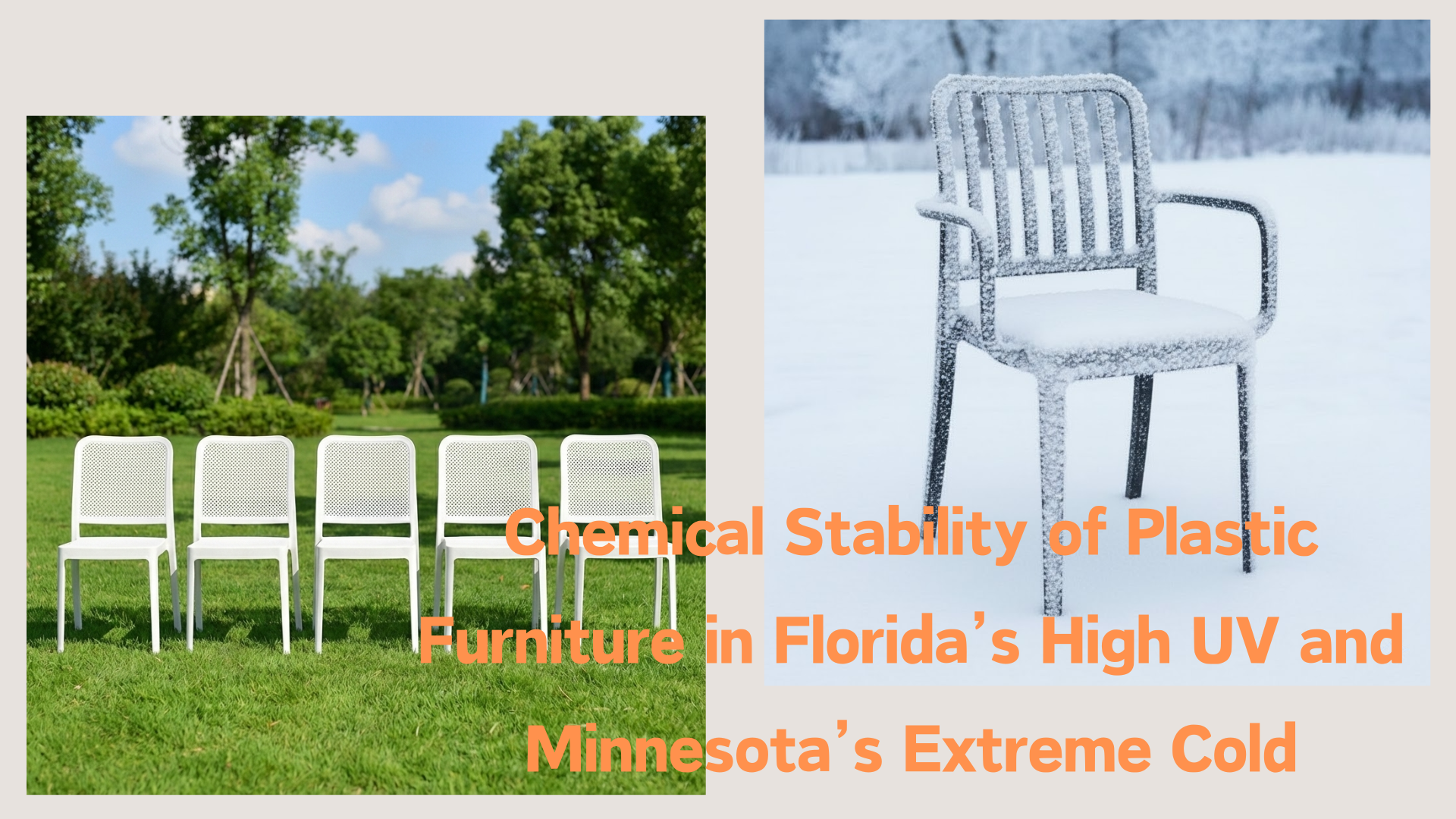
Polypropylene (PP) furniture has become a global standard for outdoor commercial use—from cafés and hotels to terraces, resorts, and public spaces. However, not all PP furniture is engineered to survive real outdoor conditions.
For professional buyers, importers, and project contractors, UV resistance is the single most decisive factor that determines whether a PP table remains reliable for years—or becomes brittle, faded, and unusable after a short period.
This article explains how UV protection truly works at the material level, how to interpret UV aging test results, and how to evaluate whether a PP table is genuinely suitable for long-term commercial outdoor use.
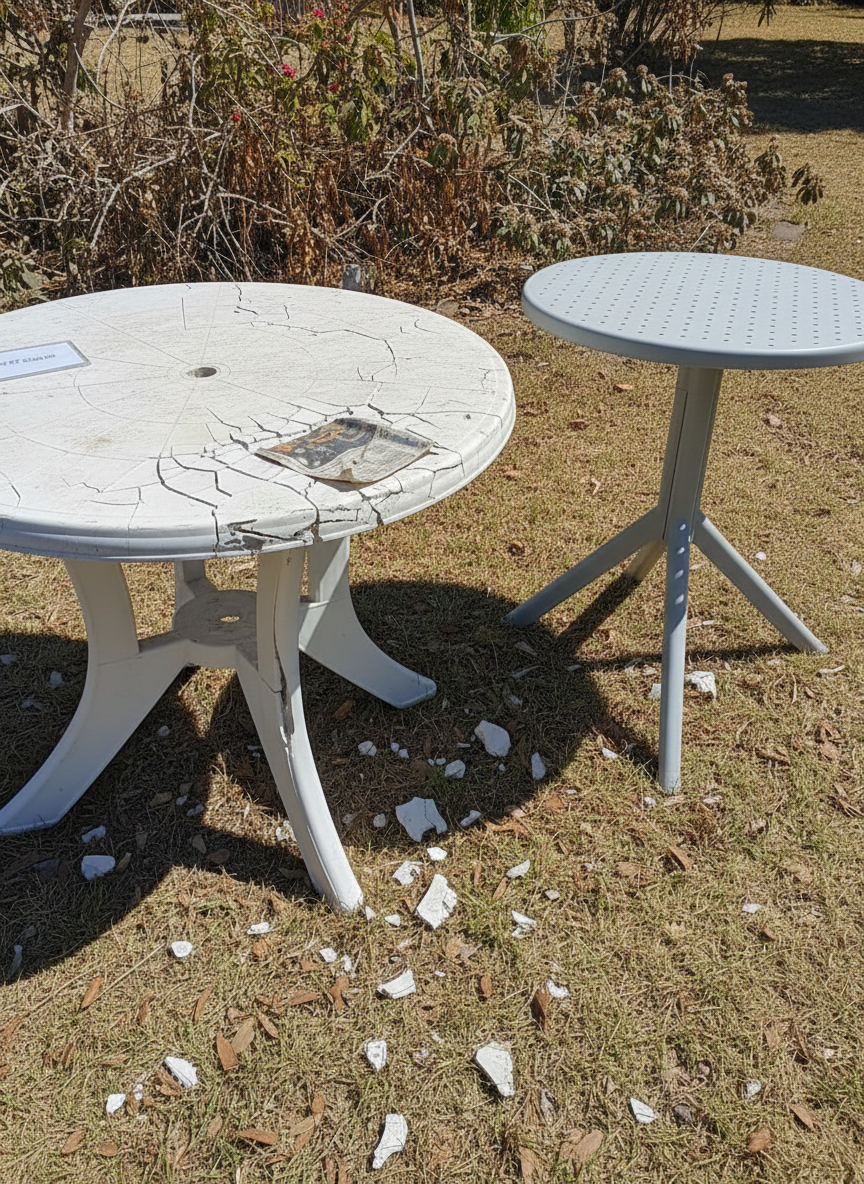
Polypropylene is inherently strong and lightweight, but ultraviolet radiation triggers photo-oxidative degradation if the material is not properly stabilized.
In outdoor environments, insufficient UV protection leads to:
This is why many PP tables look acceptable when new, yet fail prematurely after one or two outdoor seasons.
True UV resistance is not achieved by thickness or surface coatings alone. It is determined by the formulation of the PP compound itself.
Our PP tables use a commercial-grade UV stabilization system, including:
These additives absorb high-energy UV radiation and convert it into low-energy heat, preventing direct damage to polymer chains.
HALS neutralize free radicals formed during UV exposure and continuously regenerate, providing long-term protection throughout the product’s lifespan.
Color stability depends on how pigments interact with stabilizers. Our formulations are optimized to prevent pigment degradation, migration, or uneven fading.
This system protects both appearance and mechanical strength, not just surface color.
To verify long-term outdoor performance, our PP tables undergo accelerated UV aging tests designed to simulate extended real-world exposure.

After 1000 hours of accelerated aging:
This directly addresses the most common buyer concern:
“Will the table become brittle or visibly fade after prolonged outdoor use?”
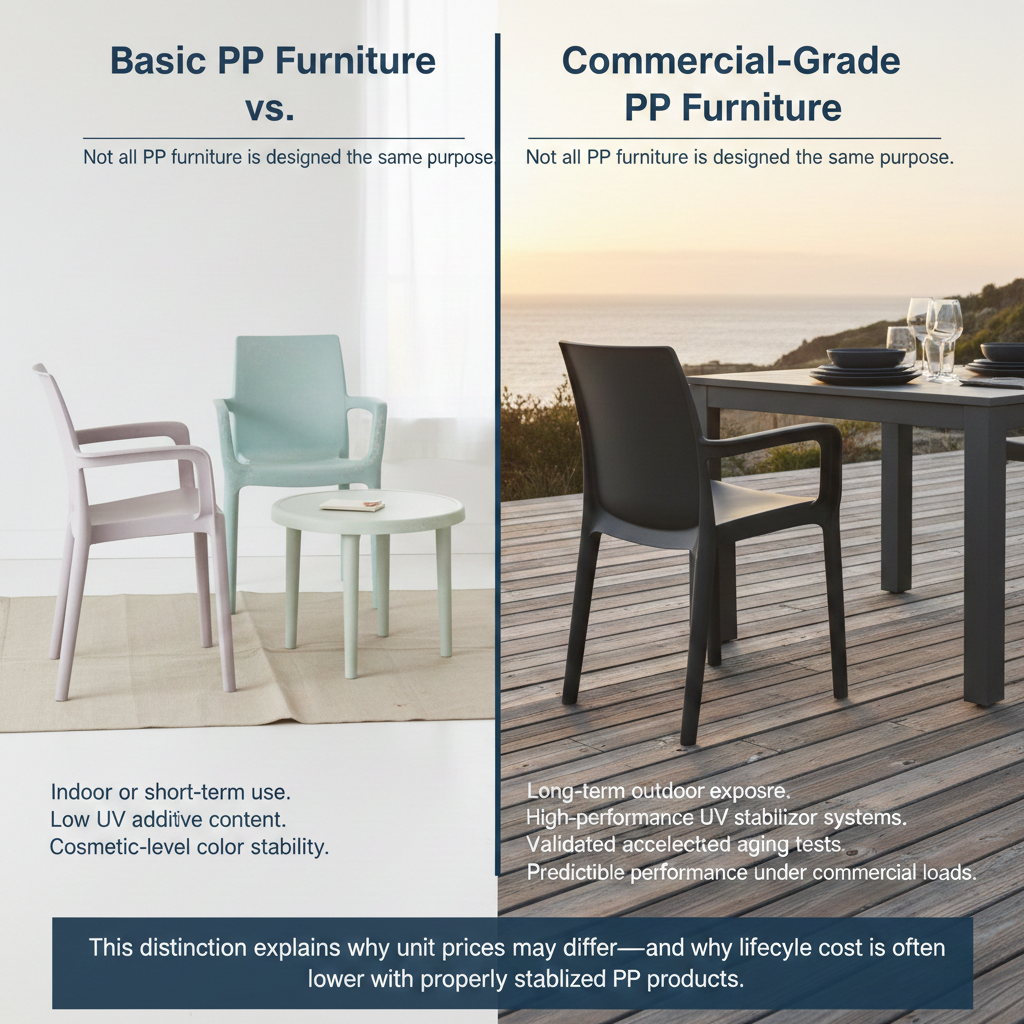
Not all PP furniture is designed for the same purpose.
Basic PP furniture is typically intended for:
Commercial-grade PP furniture, like our tables, is engineered for:
This distinction explains why unit prices may differ—and why lifecycle cost is often lower with properly stabilized PP products.
For importers, distributors, and project buyers, UV failure is not only a quality issue—it is a business risk.
Poor UV resistance can result in:
Choosing PP tables with proven UV stabilization and validated testing significantly reduces these risks.
What UV stabilizer system is used?
Our PP tables use a compound-level stabilization system combining UV absorbers and HALS for long-term protection.
Has the product undergone accelerated aging tests?
Yes. Products are tested under accelerated UV aging conditions to evaluate structural and visual stability.
What does 1000 hours of UV testing represent?
It simulates extended outdoor exposure under intensified conditions, allowing early detection of photo-oxidative degradation.
How is color fading evaluated?
Color stability is assessed before and after testing. Only controlled, commercially acceptable changes are permitted.
Is the product suitable for high-UV regions?
Yes. The formulation is designed for commercial outdoor environments with strong sunlight.
What warranty coverage is provided?
We provide performance commitments against abnormal fading and premature embrittlement under normal commercial outdoor use, based on validated test results.
In PP outdoor furniture, UV resistance determines product lifespan, safety, and brand credibility.
Surface appearance alone is not enough. Only material formulation, stabilizer quality, and verified testing provide reliable long-term performance.
Our PP tables are engineered with this philosophy from the compound level upward—so our partners can specify, sell, and use them with confidence in demanding outdoor environments.
Fill out the contact form with your ideas today and find the right furniture sets for your room applications.

MAKA offers high-performance and personalized furniture for any room and condition at affordable prices. Order now at an MOQ of 100.