When chairs fail, they rarely fail gracefully.
For larger users or elderly people, a sudden chair collapse is not just uncomfortable—it can cause serious injury, loss of confidence, and legal liability for operators. This is why structural safety under high load (300–500 lbs) has become a critical requirement for plastic folding chairs and stackable chairs used in commercial, public, and healthcare environments.
So how do well-designed plastic chairs prevent catastrophic failure—and what separates truly safe products from visually similar but structurally risky ones?
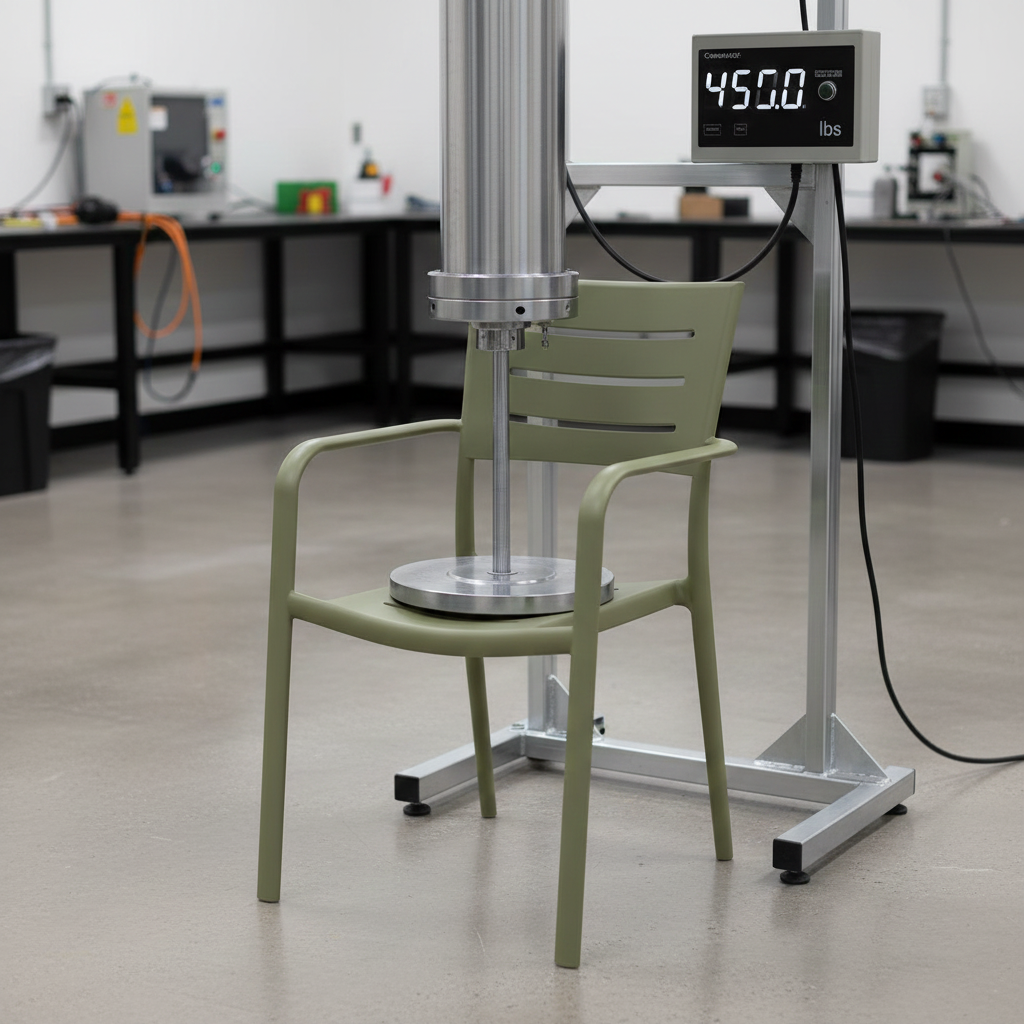
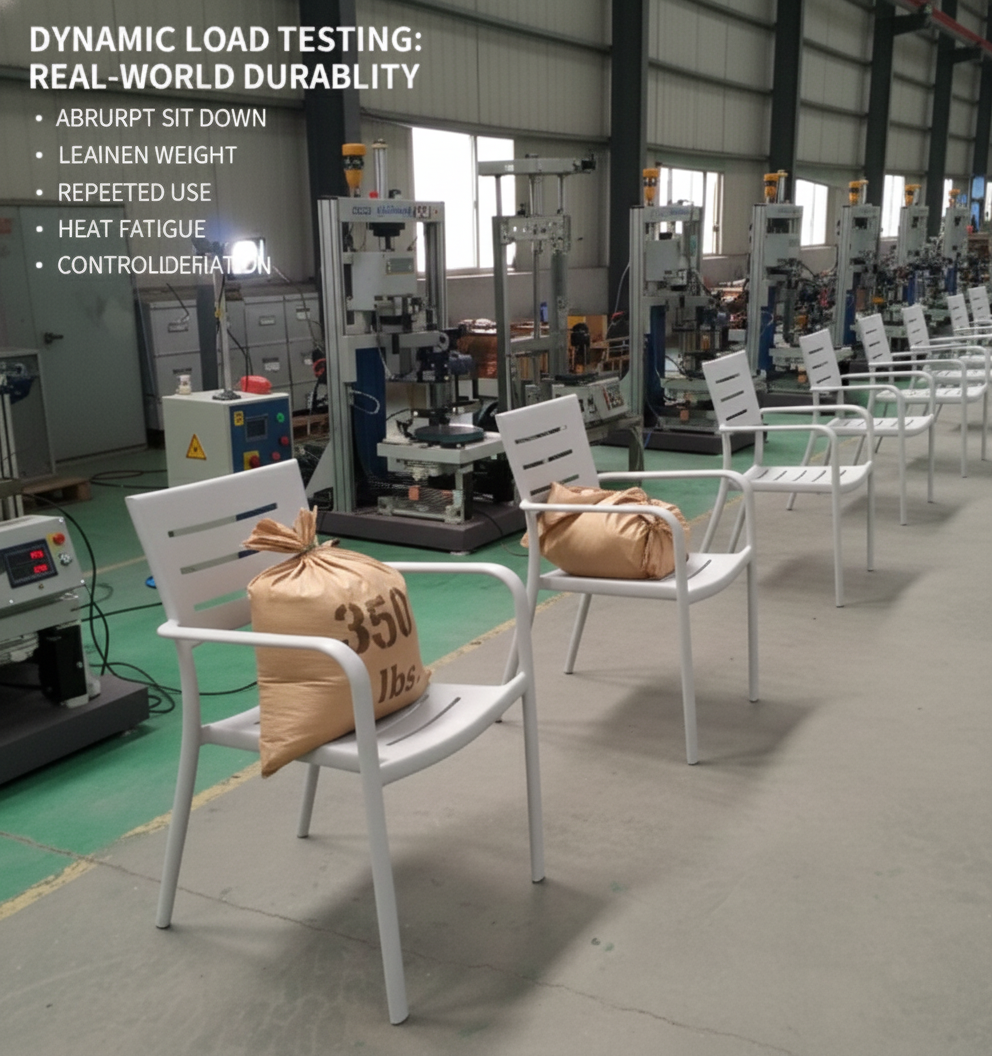
Many chairs are advertised with a static load rating, such as 300 lbs or 350 lbs. However, real-world use is dynamic, not static.
High-risk scenarios include:
A chair that only passes a single static load test may still fail catastrophically in actual use.
True safety is about controlled deformation, not just strength.
High-safety plastic chairs do not rely on ordinary polypropylene.
Instead, they use:
This combination allows the material to:
For elderly users especially, this means the chair will bend slightly under stress rather than snapping suddenly.
A common misconception is that thicker plastic equals stronger chairs.
In reality, geometry matters more than thickness.
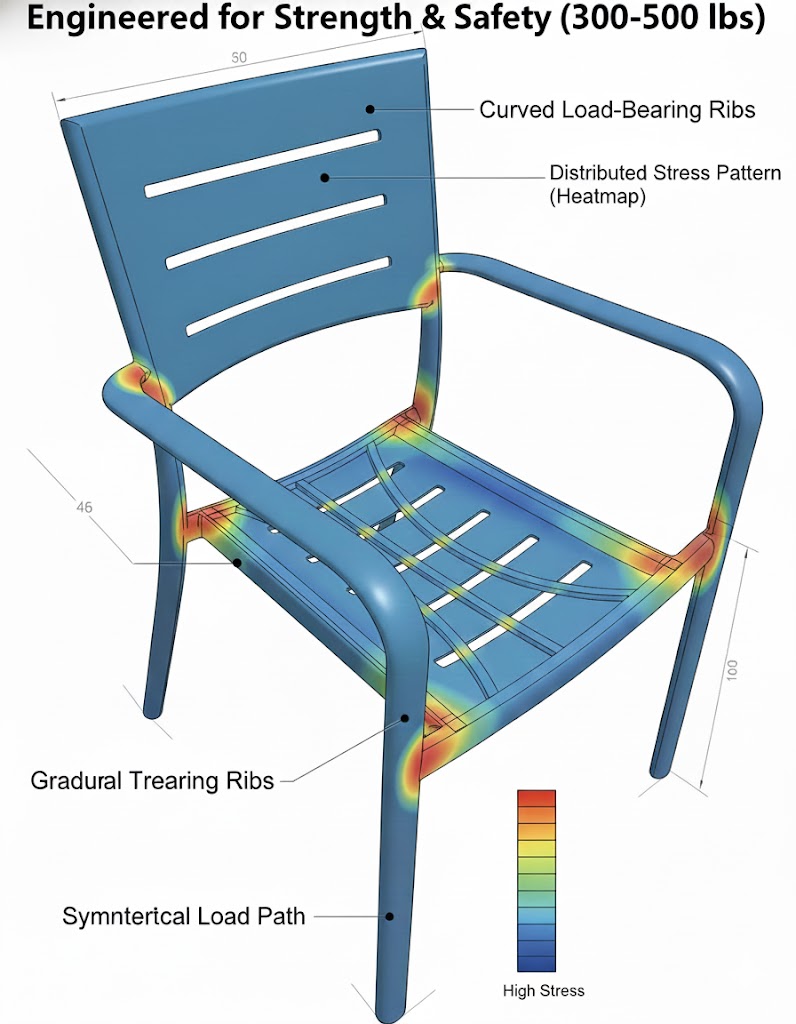
Safe chairs designed for 300–500 lbs use:
This design ensures that when overload occurs, stress spreads across the structure instead of concentrating at one brittle failure point.
For high-risk users, the goal is not “never break”—it is never break suddenly.
Well-engineered plastic folding and stackable chairs are designed to:
This gives users time to react and prevents sudden collapse, which is especially critical for elderly users with limited mobility or balance.
For folding chairs, hinges and locking points are often the weakest areas.
Safe designs address this by:
For stackable chairs, reinforced leg intersections and anti-shear geometry prevent leg splaying when heavy users sit down.
Chairs designed for larger and elderly users must pass more than basic lab tests.
Meaningful safety testing includes:
Only after this combination can a chair be considered suitable for public, healthcare, or senior-focused environments.
High-load, failure-tolerant plastic chairs are essential in:
In these spaces, one chair failure can mean lawsuits, reputational damage, and serious injury.
For larger and elderly users, chair safety is not about comfort or appearance—it is about trust.
A well-designed plastic folding or stackable chair does not simply “hold weight.”
It manages stress, absorbs impact, and fails safely if pushed beyond limits.
That difference is invisible at first glance—but absolutely critical in real life.
Fill out the contact form with your ideas today and find the right furniture sets for your room applications.

MAKA offers high-performance and personalized furniture for any room and condition at affordable prices. Order now at an MOQ of 100.