Restaurant chairs need to support guests comfortably through repeated daily use. A high load number on a product sheet answers only part of a buyer’s question.
Plastic chair weight capacity must be confirmed for the exact model. Plastic chairs can be suitable for daily restaurant use when their documented strength, durability, stability and intended use match the venue’s requirements.
For importers, wholesalers and hospitality buyers, the starting point is a clearly stated maximum user weight, supported by relevant product documentation.
There is no single weight limit that applies to every plastic chair. The material description “PP chair” or “polypropylene chair” does not establish a load rating.
For example, if a manufacturer specifies a maximum user weight of 150 kg, that is approximately 330 lb. Confirm the conditions attached to that rating and that it applies to the model being purchased.
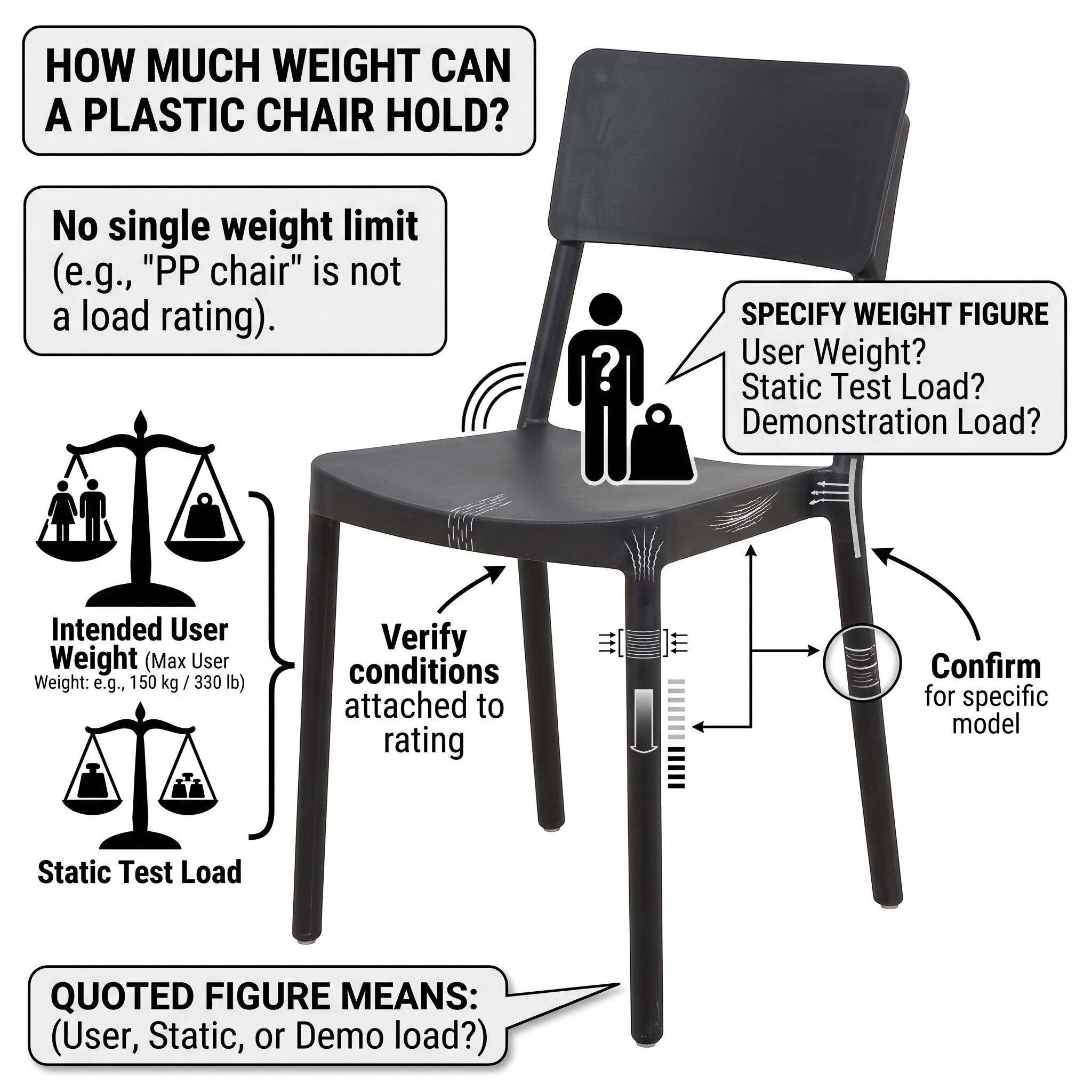
Ask what any quoted weight figure means. It may describe the intended user weight, a static test load or a demonstration load. Each provides different information.
| Information | What it tells the buyer |
|---|---|
| Maximum user weight | The manufacturer’s stated limit for normal use under the specified conditions. |
| Static load test | How a sample performed under a defined load, loading method and duration. |
| Durability test | How the chair performed under repeated loading in a defined test. |
| Stability test | How the chair resisted overturning under specified conditions. |
Photographs of weights on a seat should be accompanied by the test method, results and model identification. Use the documented user rating when specifying seating for a venue.
Yes, appropriately specified plastic chairs can be used in restaurants, cafés and hotel dining areas. Buyers should confirm that the selected model is intended for that commercial setting.
Restaurant use involves repeated sitting, leaning against the backrest, moving chairs between tables and cleaning after service. Stackable models also need to tolerate handling within their stated stacking instructions.
Assess these practical points when reviewing commercial polypropylene chairs:
During a sample review, also use the chair with the intended dining table. Seat height, armrest clearance and space to pull the chair back affect the dining experience.
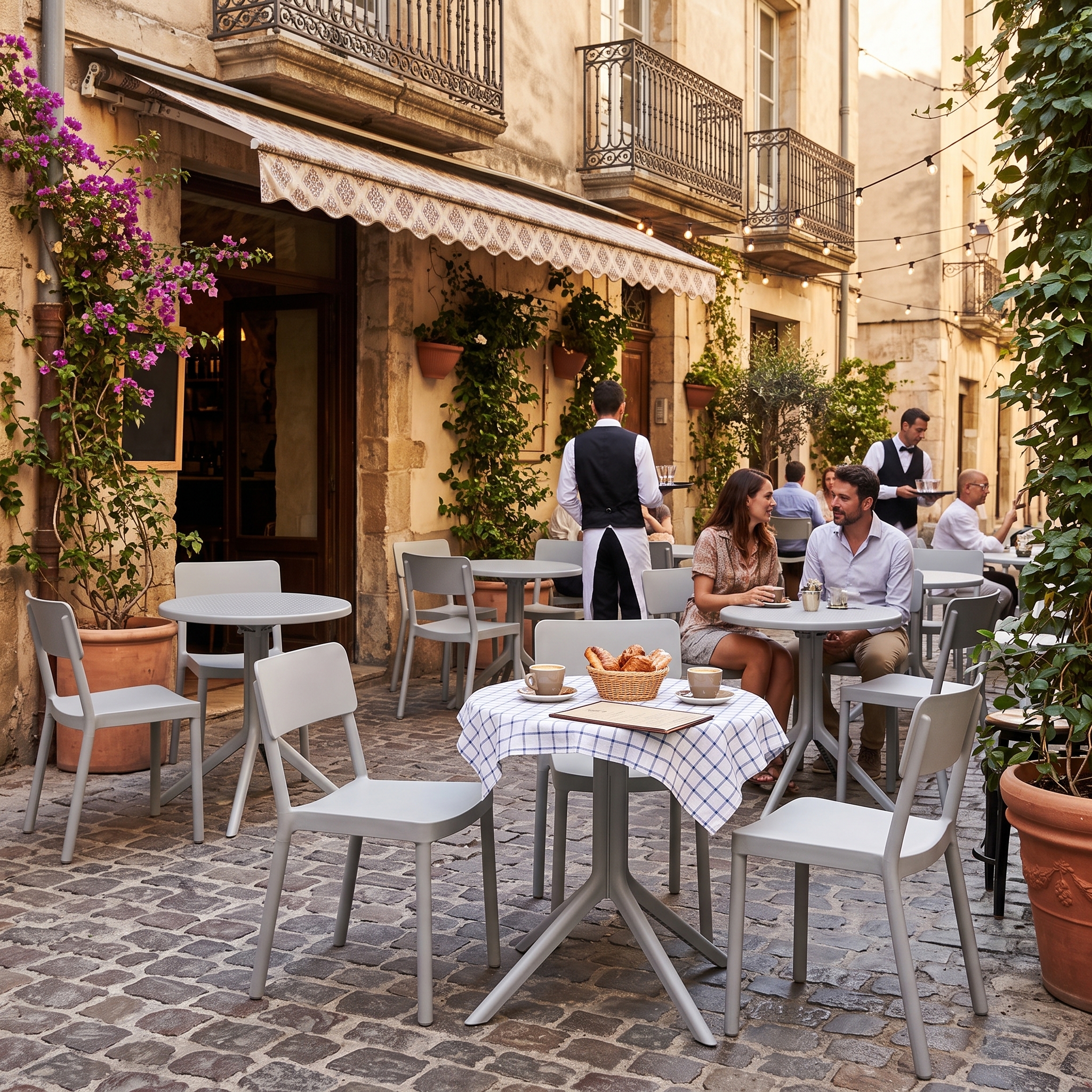
“Plastic” is a broad description. Confirm whether the chair uses polypropylene, a reinforced formulation or another specified material.
For glass-fiber-reinforced polypropylene chairs, request the material specification alongside the finished-chair test results. The material description should correspond to the model being ordered.
Batch consistency also matters. Agree on the approved material, color, dimensions and quality checks before production. Keep a reference sample so the delivered chairs can be compared with the specification accepted at the start.
This gives distributors and project buyers a clearer basis for checking repeat orders and investigating any differences.
Read the scope of the report as carefully as the result. Different standards address different seating applications.
| Standard | Scope to check |
|---|---|
| EN 12520 | Domestic seating. A report under this standard alone does not establish restaurant-use suitability. BSI: EN 12520 |
| EN 16139 | Safety, strength and durability requirements and test methods for non-domestic seating. Check the applicable requirements for the intended project. BSI: EN 16139 |
| EN 581-2 | Mechanical safety requirements and test methods for outdoor seating for camping, domestic and contract use. Confirm which use category the report actually covers. BSI: EN 581-2 |
Use these scopes to identify the evidence needed for the project. Confirm the report’s actual use category before relying on a pass result.
Check the report’s model number, sample description, standard edition, use category, test conditions, results and exclusions. Agree on the applicable requirements for the destination market and project before placing an order.
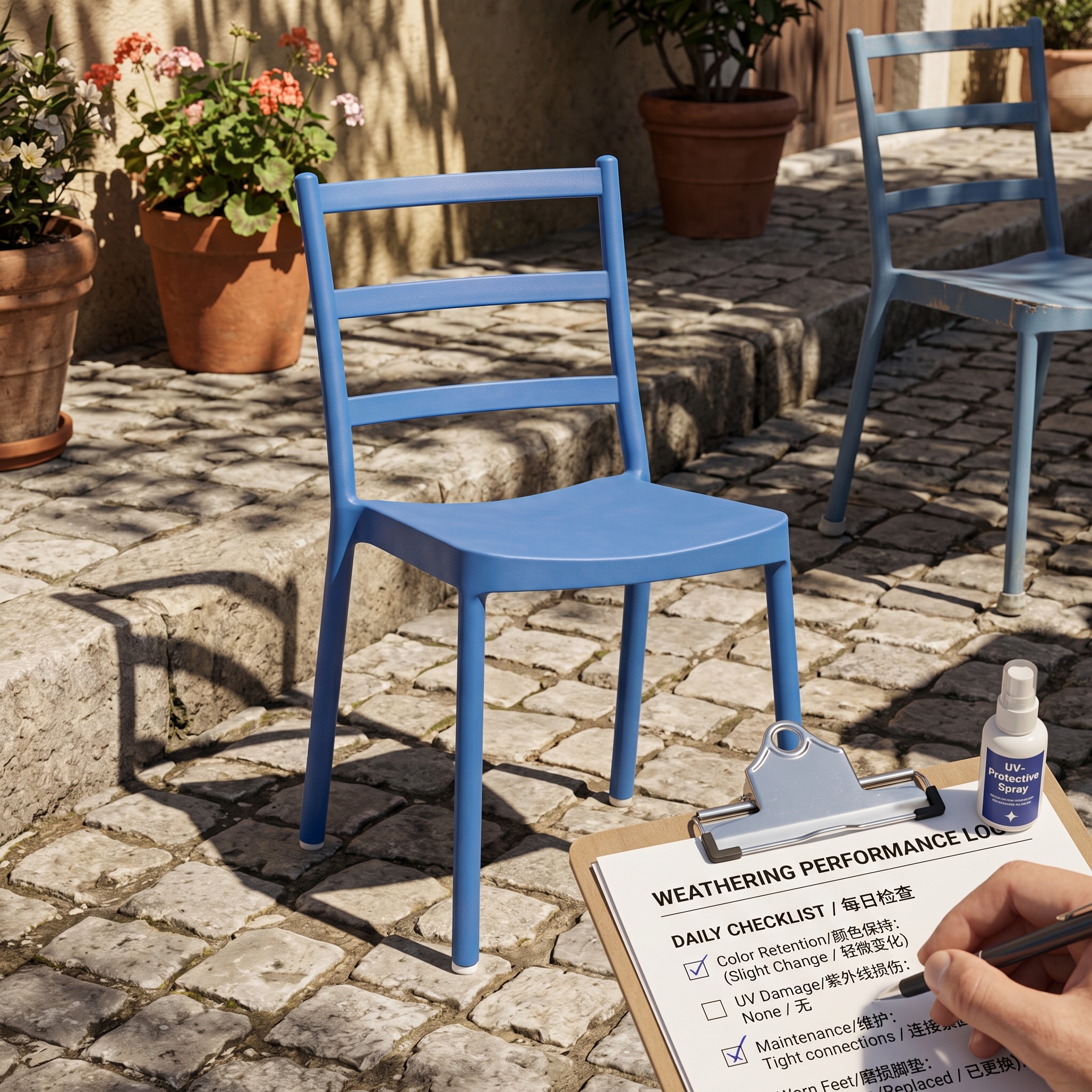
Plastic outdoor chairs for restaurant patios and café terraces also need suitable weathering performance.
For PP seating, ask about the UV-stabilized formulation and the evidence for color retention and material aging. Review what the weathering report measured, such as color change or mechanical properties after exposure.
Match that evidence to the supplied material and color. Follow the care and storage instructions for the intended environment.
Daily maintenance should include checking for damage and, where relevant, loose connections or worn feet. Remove damaged chairs from service and follow the supplier’s replacement guidance.
The product specification should answer five questions:
For buyers sourcing stackable restaurant chairs or contract outdoor furniture, these answers make product comparisons more meaningful and help set clear expectations with end customers.
Planning a restaurant, café or hotel seating order? Contact MAKA Furniture with the chair model, required user weight, indoor or outdoor setting, quantity and destination market. Request the model-specific specifications and applicable test documentation to support your selection.
Fill out the contact form with your ideas today and find the right furniture sets for your room applications.

MAKA offers high-performance and personalized furniture for any room and condition at affordable prices. Order now at an MOQ of 100.