Outdoor furniture does not fail in laboratories—it fails in the real world.
Relentless sunlight, drastic temperature swings, moisture, and repeated mechanical stress slowly degrade materials over time. For plastic furniture used in commercial environments, long-term chemical stability is the true determinant of lifespan.
Two U.S. regions illustrate the most demanding climatic extremes: Florida, with its year-round high ultraviolet (UV) exposure, heat, and humidity; and Minnesota, where prolonged subzero temperatures and freeze–thaw cycles dominate. Evaluating plastic furniture across these two environments reveals how well the material resists aging at the molecular level.
Florida receives some of the highest annual UV radiation levels in North America. For plastic furniture, this creates continuous photo-oxidative stress that can break polymer chains if the material is poorly stabilized.
From a chemical perspective, prolonged UV exposure can lead to:
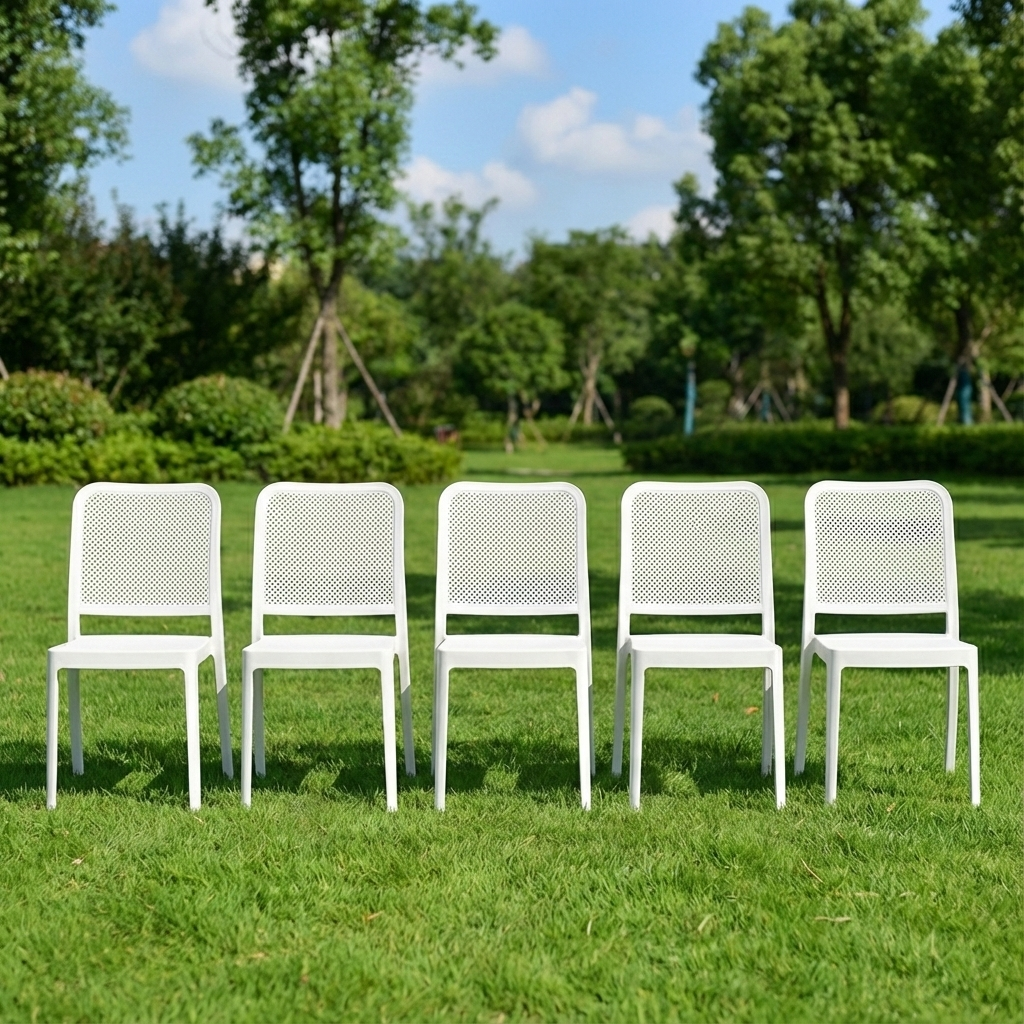
High-quality outdoor plastic furniture addresses these risks through UV-stabilized polypropylene (PP) formulations. UV absorbers and HALS (Hindered Amine Light Stabilizers) are dispersed at the molecular level, preventing UV energy from breaking polymer bonds.
When properly stabilized, the polymer structure remains intact even after extended exposure equivalent to many years of Florida sunlight. This is why commercial-grade plastic furniture used in resorts, pool decks, and coastal cafés maintains structural integrity and color stability far longer than residential-grade alternatives.
Minnesota represents the opposite challenge. Winter temperatures frequently drop below −20°C (−4°F), placing polymers under intense thermal stress.
In cold environments, inferior plastics often fail due to:
Commercial plastic furniture designed for cold climates uses impact-modified PP compounds with controlled crystallinity. These formulations allow the polymer chains to maintain flexibility rather than locking into a brittle state.
Chemically stable plastics do not rely on surface softness; instead, they preserve energy absorption capacity within the polymer matrix. As a result, chairs can withstand stacking, movement, and daily use even in subzero temperatures without cracking.
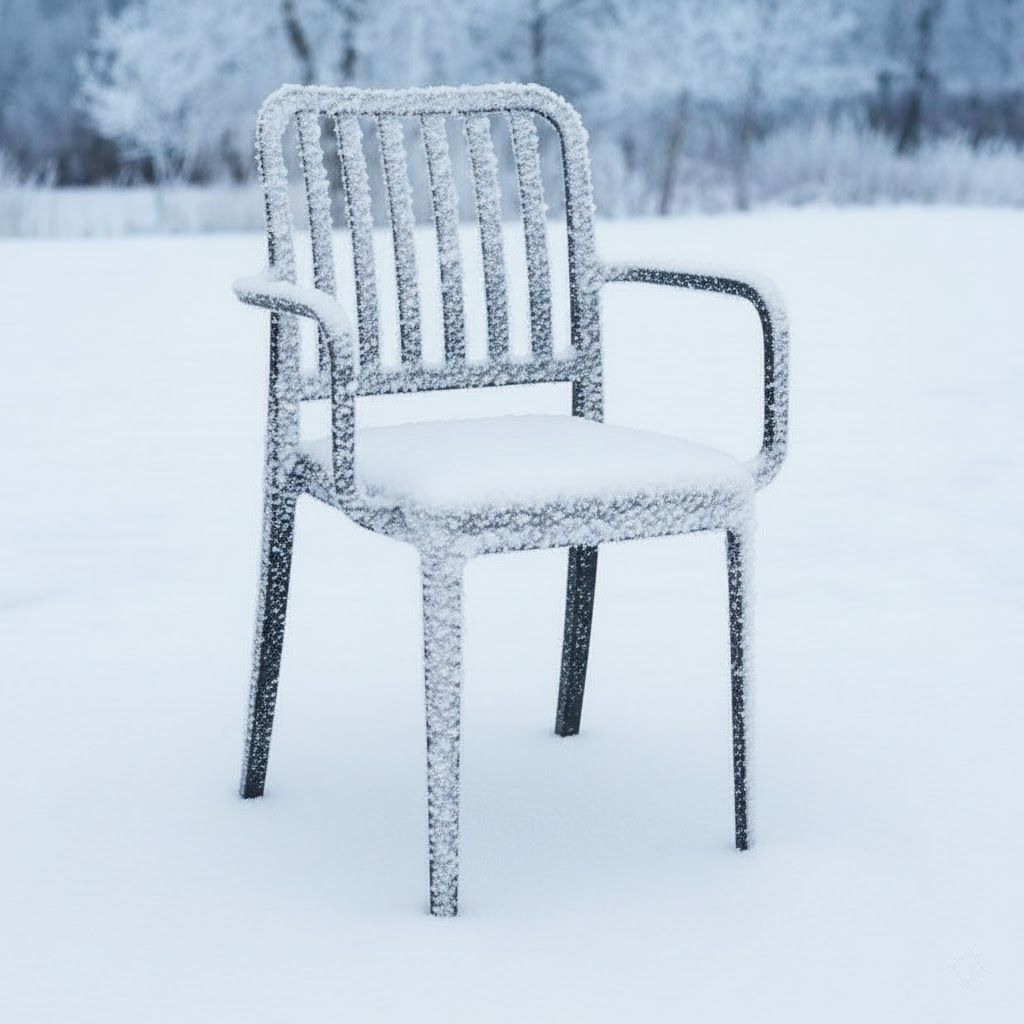
The most severe aging occurs not at temperature extremes, but during repeated thermal cycling—day-night swings in Florida heat or seasonal freeze-thaw transitions in Minnesota.
Each cycle causes the polymer to expand and contract. Poorly formulated plastics experience internal stress accumulation, eventually leading to deformation or failure.
Well-engineered plastic furniture mitigates this through:
This is why long-life commercial furniture often outperforms visually similar products after just a few seasons.
From a materials science standpoint, long-term durability is not about how plastic looks on day one—it is about how stable the polymer chemistry remains after years of exposure.
In both Florida’s UV-intensive environment and Minnesota’s extreme cold, chemically stable plastic furniture demonstrates:
For hospitality groups, facility managers, and outdoor venue operators, this stability translates directly into lower total cost of ownership and fewer operational disruptions.
Extreme climates accelerate material aging, exposing weaknesses that moderate environments often conceal. Plastic furniture that survives Florida’s UV intensity and Minnesota’s winter extremes does so not by chance, but by deliberate chemical and structural design.
When evaluated through the lens of polymer stability, it becomes clear that commercial-grade plastic furniture is not simply a lightweight alternative—it is a long-term engineered solution for demanding outdoor environments.
Fill out the contact form with your ideas today and find the right furniture sets for your room applications.

MAKA offers high-performance and personalized furniture for any room and condition at affordable prices. Order now at an MOQ of 100.