In the global furniture industry, supplier relationships often last for years.
Distributors invest significant time building cooperation with manufacturers — developing product lines, market positioning, logistics planning, and customer trust.
Changing a supplier is disruptive, risky, and expensive.
Yet every year, distributors still decide to switch suppliers.
Surprisingly, the primary reason is almost never price.
The real reason is far more critical:
Unpredictability.
For distributors and importers, furniture is not simply inventory.
It represents:
When a supplier becomes unpredictable, risk begins to accumulate across the business.
Typical warning signs include:
At this stage, distributors start reconsidering partnerships.
Not because margins disappear — but because confidence does.
Most supplier changes begin downstream.
Restaurants complain about unstable tables.
Retail customers report cracking chairs.
Project clients request replacements earlier than expected.
Each complaint forces distributors to spend resources on:
Over time, the operational burden becomes larger than the purchasing advantage.
Many experienced distributors describe the moment clearly:
“We didn’t change suppliers to save money.
We changed suppliers to stop problems.”
Interestingly, distributors do not expect zero problems.
What they expect is consistency.
A reliable supplier delivers:
Inconsistent suppliers create uncertainty that spreads throughout the distribution network.
And uncertainty is expensive.
Suppliers competing primarily on price frequently optimize for short-term competitiveness:
These decisions may remain invisible during the first shipment.
But after products reach real commercial environments, differences appear quickly.
Distributors then face the true cost:
lost trust from customers.
Across Europe, Australia, and North America, experienced distributors increasingly prioritize supplier stability over pricing advantages.
Today’s evaluation criteria often include:
| Distributor Question | Business Meaning |
|---|---|
| Can quality remain consistent for years? | Protect reputation |
| Will complaint rates stay predictable? | Reduce operational stress |
| Does the supplier understand commercial use? | Project reliability |
| Can problems be solved quickly? | Partnership security |
The strongest distributor–manufacturer relationships are built on operational confidence.
Long-term partnerships usually share several characteristics:
✅ consistent manufacturing standards
✅ commercial-grade product engineering
✅ transparent communication
✅ stable delivery performance
✅ shared understanding of market expectations
Because distributors are not only buying products.
They are choosing risk partners.
At MAKA Furniture, cooperation with distributors is approached from a long-term operational perspective.
Our focus is not simply supplying furniture, but helping partners maintain:
Because successful distributors grow with suppliers they can rely on year after year.
When distributors change furniture suppliers, it rarely starts with pricing discussions.
It starts when uncertainty becomes greater than trust.
The most competitive supplier is therefore not always the cheapest one.
It is the one that allows distributors to operate their business with confidence.
In commercial furniture distribution:
Reliability keeps partnerships.
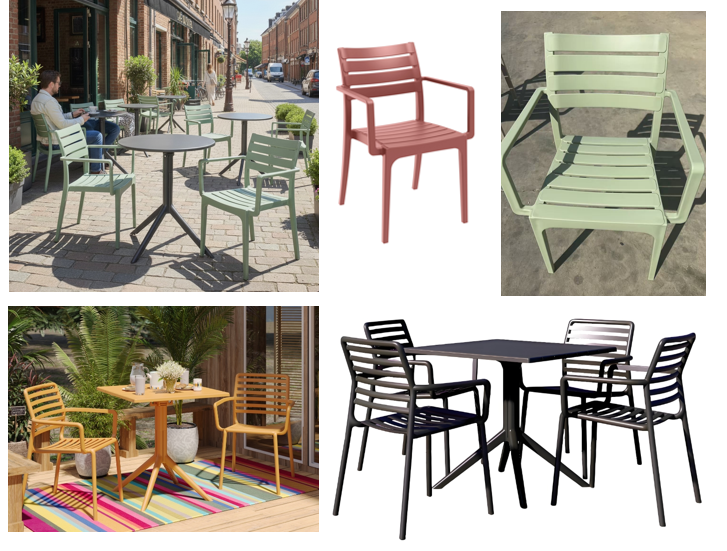
Fill out the contact form with your ideas today and find the right furniture sets for your room applications.

MAKA offers high-performance and personalized furniture for any room and condition at affordable prices. Order now at an MOQ of 100.