Many distributors and hospitality buyers face the same frustrating situation:
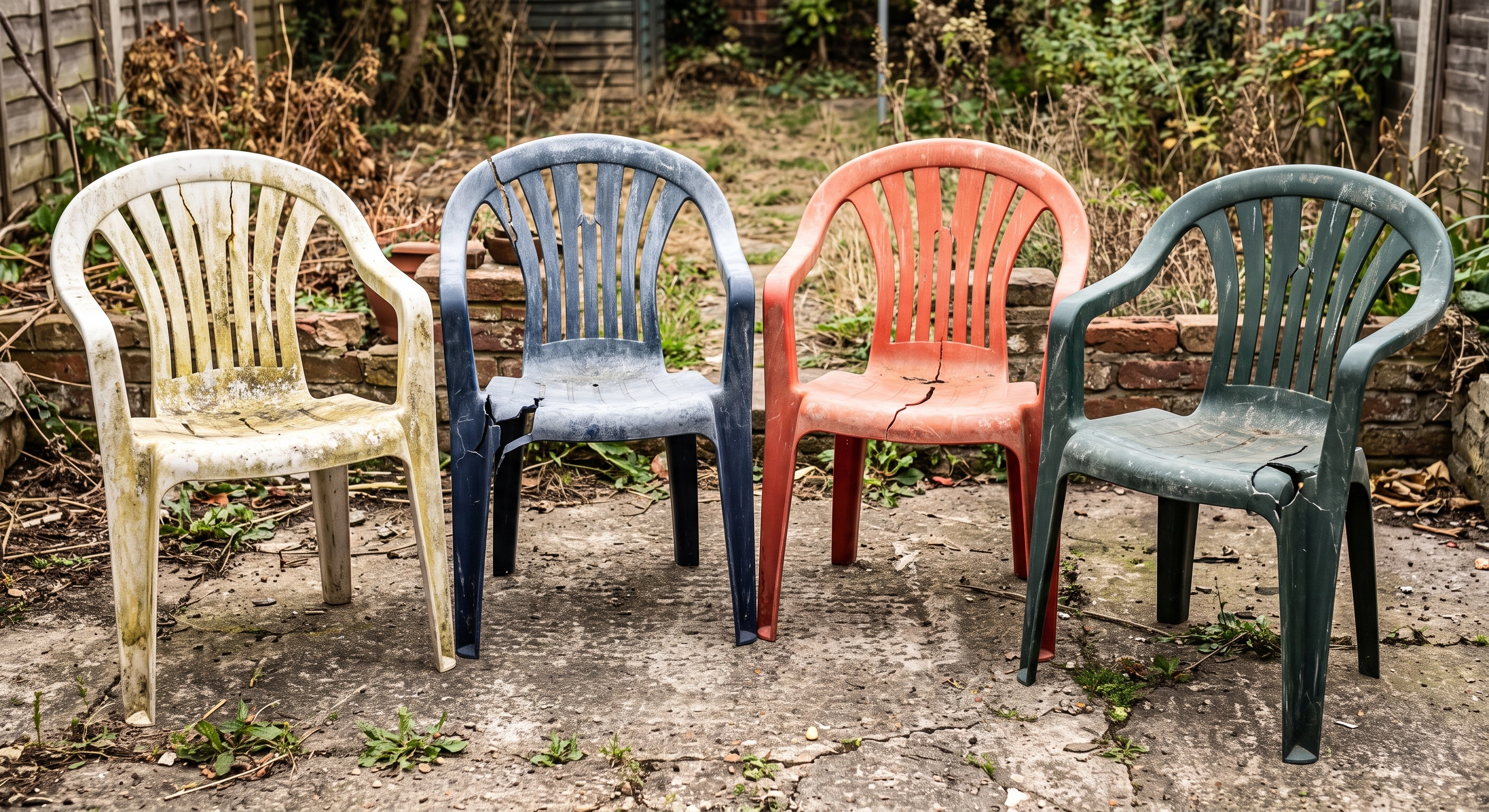
Plastic chairs that look strong during purchase begin failing much earlier than expected once installed in cafés, restaurants, or public dining areas.
Cracks appear.
Structures loosen.
Colors fade.
Customer complaints increase.
The question is often asked:
Why do plastic chairs fail so quickly in commercial environments?
The answer is rarely about weight capacity.
It is about fatigue, environment, and design philosophy.
One of the biggest misunderstandings in furniture sourcing is assuming that all outdoor plastic chairs perform similarly.
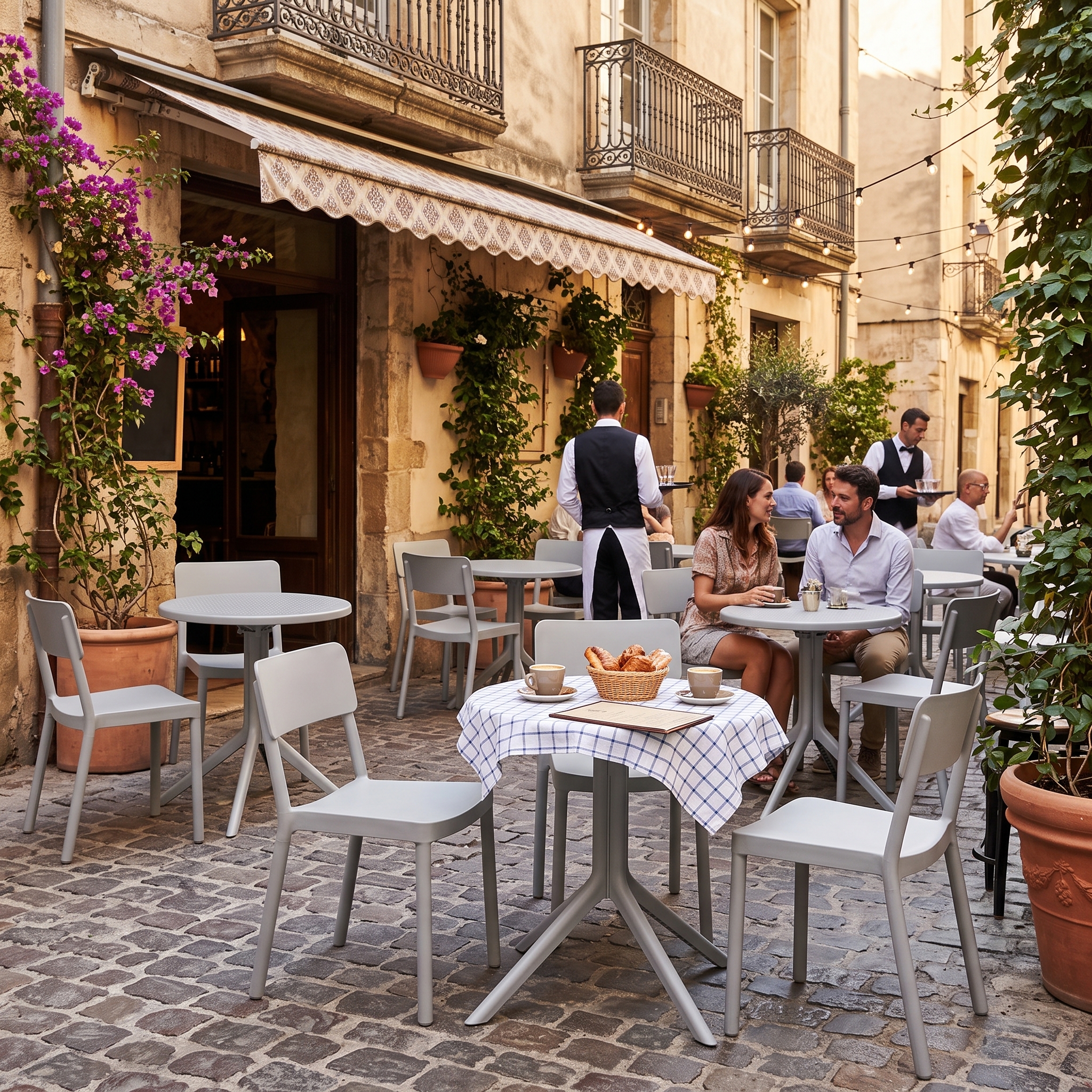
In reality, café and restaurant environments create extreme operating conditions.
A chair in a restaurant may experience:
Within one year, a commercial chair may experience more stress than a residential chair does in 5–8 years.
Most failures begin here.
Many suppliers promote chairs using statements like:
“150 kg load capacity tested.”
However, commercial failure is rarely caused by one heavy load.
It happens because of repeated micro-stress.
Each sitting action slightly flexes the chair structure.
Over thousands of cycles, material fatigue develops in critical areas:
Eventually, cracks appear — even though the chair once passed testing.
Commercial furniture must therefore be designed for fatigue life, not single-load strength.
Sunlight does more than fade color.
UV radiation gradually breaks polymer molecular chains.
Without proper stabilization:
This process is invisible at first.
But after one or two summers, chairs begin failing unexpectedly.
For distributors, this often results in warranty claims appearing long after shipment.
Outdoor café environments frequently expose chairs to surface temperatures above 60°C.
At high temperatures:
When cooling occurs at night, materials contract again.
This daily expansion cycle accelerates structural fatigue.
Most residential-grade chairs are never designed for this condition.
A major industry reality is that many plastic chairs are engineered primarily for:
Instead of long-term commercial survival.
Small design decisions greatly affect durability:
Two chairs may look identical — yet perform completely differently after one year of use.
Experienced importers today increasingly shift their evaluation criteria.
Instead of asking only about price or certification, they focus on:
| Key Question | Business Impact |
|---|---|
| Is the chair fatigue-tested? | Lower replacement rate |
| Is UV stabilization long-term? | Fewer seasonal complaints |
| Is structure integrated or weak-point assembled? | Better safety |
| Is the chair designed for commercial cycles? | Longer lifecycle |
Because in hospitality projects, furniture durability directly affects profitability.
A chair intended for cafés and restaurants should include:
✅ UV stabilization suitable for long outdoor exposure
✅ Structural design distributing sitting stress evenly
✅ Reinforced transition zones preventing crack initiation
✅ Material formulation maintaining flexibility over time
✅ Fatigue-oriented engineering for repeated daily use
Commercial furniture is not defined by appearance.
It is defined by predictable performance over years of operation.
Many buyers discover too late that the lowest purchase price often creates the highest operational cost.
Early chair failure leads to:
For distributors and importers, reliability often matters more than initial margin.
Plastic chairs used in cafés and restaurants rarely fail overnight.
They fail because they were never designed for commercial reality.
When selecting seating for hospitality environments, the most important question is not:
“How strong is the chair today?”
But rather:
“How will this chair perform after millions of uses?”
Because in commercial furniture, durability is not a feature.
It is risk control.
Fill out the contact form with your ideas today and find the right furniture sets for your room applications.

MAKA offers high-performance and personalized furniture for any room and condition at affordable prices. Order now at an MOQ of 100.